
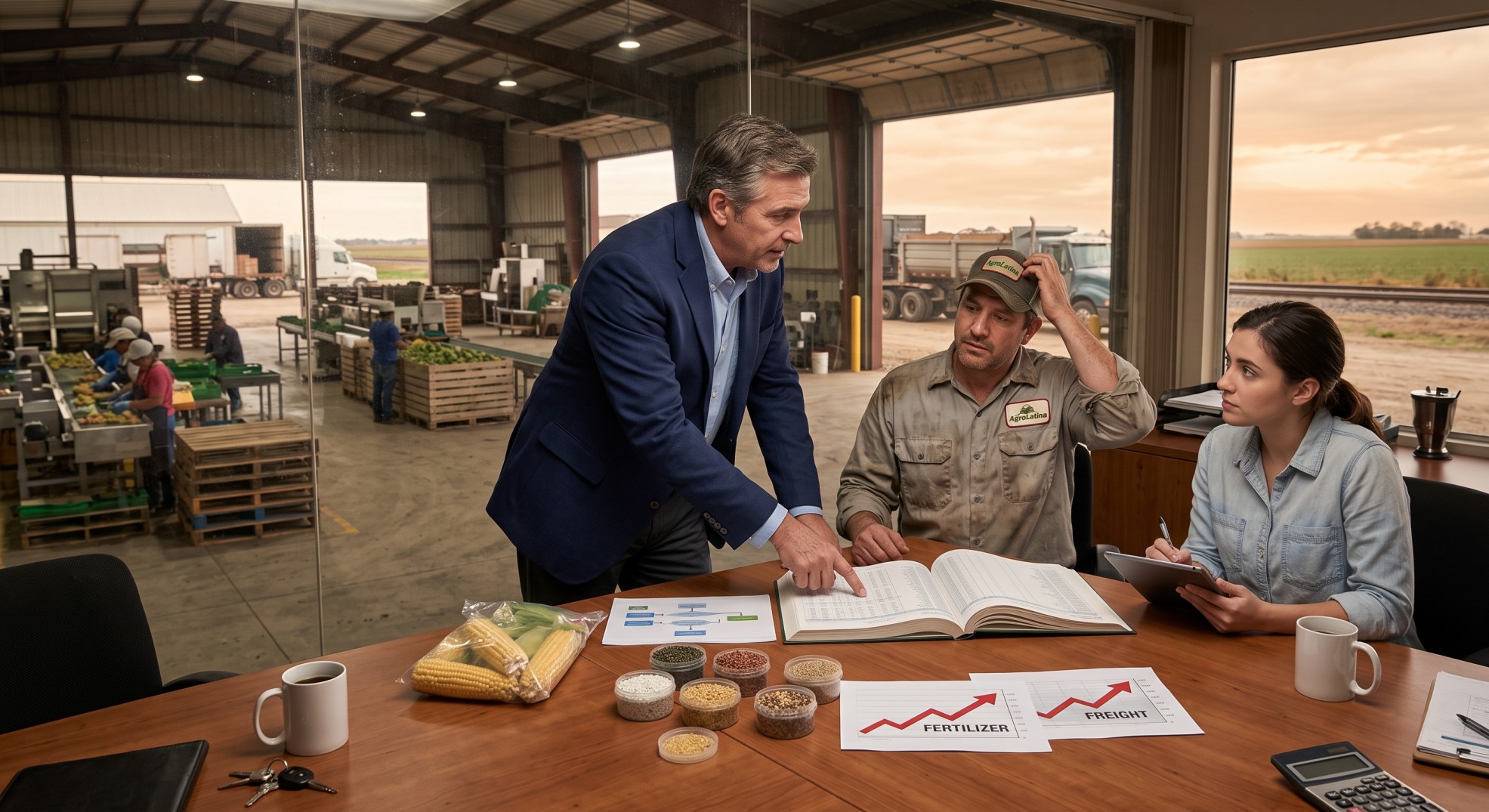
Rising fertilizer and freight costs are squeezing profit margins across Latin American agribusiness, forcing farming operations to rethink sourcing, pricing, and operational efficiency. Family-owned and mid-sized producers face the sharpest pressure, since they often lack the scale to absorb higher input costs or negotiate better freight terms. Strategic sourcing decisions and disciplined cash flow management are now essential to protect competitiveness.
Farming has always required patience with things outside a producer's control — weather, pests, market prices. But the current cost environment is testing something different: the financial structure underneath the operation itself. Fertilizer prices have climbed on the back of global supply chain disruptions, and freight costs continue to swing with fuel prices and shipping demand. Together, these pressures are compressing margins for Latin American agribusinesses at a moment when many were already managing tight budgets.
For large, vertically integrated operations, absorbing these increases is uncomfortable but manageable. For family-owned and mid-sized farms — which make up a substantial share of agricultural production across the region — the math is less forgiving. These operations typically have thinner cash reserves, less negotiating leverage with suppliers and shippers, and fewer options for passing costs downstream without risking customer relationships built over years, sometimes generations.
This article examines what's driving these cost increases, how they're reshaping decisions across Latin American agribusiness, and what owners and leadership teams can do to protect their competitive position.
What is causing fertilizer and freight costs to rise across Latin America?
Three forces are converging to drive up input costs for agricultural producers in the region.
Global fertilizer supply chains remain disrupted. Fertilizer production is concentrated in a handful of countries, and geopolitical instability affecting major producers has tightened global supply. When supply tightens at the source, the effect ripples through every market that depends on imported fertilizer — including much of Latin America, where domestic fertilizer production doesn't meet regional demand.
Freight rates remain volatile. Fuel price swings, port congestion, and uneven shipping demand have made ocean and land freight costs far less predictable than they were a decade ago. For agribusinesses that import fertilizer, seed, or equipment — and export crops to distant markets — this volatility complicates budgeting in ways that go beyond a simple price increase. It's the unpredictability itself that makes planning difficult.
Currency fluctuations compound the problem. Many agricultural inputs are priced in U.S. dollars, while revenue for domestic and regional sales often comes in local currency. When a country's currency weakens against the dollar, the local cost of imported fertilizer and equipment rises even if the global dollar price stays flat. This currency exposure adds another layer of uncertainty for producers who already have limited ability to hedge.
None of these forces operate in isolation. A producer facing a weaker local currency and a fertilizer price spike at the same time is absorbing two cost increases that compound rather than simply add.
How are these cost pressures affecting Latin American agribusinesses?
The consequences show up in a few predictable places, though how severely depends on the size, structure, and market position of the operation.
Profitability and cash flow come under strain first. Higher input costs eat directly into margins, and if a farm's revenue cycle is seasonal, the mismatch between when costs are paid and when crops are sold can create serious cash flow gaps. This is where family-owned operations often feel the pressure most acutely — they may not have the credit lines or reserves that larger, publicly backed competitors can draw on.
Pricing decisions become more difficult. Raising prices to offset higher costs is the obvious response, but it carries real risk. In domestic markets, price increases can push customers toward lower-cost competitors. In export markets, Latin American producers are often competing against growers in other regions who may not be facing the same currency or freight pressures. Getting this pricing decision wrong — in either direction — has lasting consequences.
Sourcing decisions grow more complex. The question of whether to source fertilizer and inputs locally or continue importing no longer has an easy answer. Local sourcing may reduce exposure to freight volatility and currency risk, but it can come with trade-offs in product quality, availability, or price. Each operation needs to run this comparison based on its own supplier relationships and logistics — not a regional assumption.
Operational efficiency becomes the lever that's left. When input costs are largely outside a producer's control and pricing power is limited, the remaining path to protecting margin is tightening how the operation runs internally: reducing waste, improving yield per input, and eliminating inefficiencies that were tolerable when margins were wider.
What strategic responses should agribusiness leaders consider?
Leadership teams facing this cost environment have several practical levers available, though the right combination depends on the specific operation.
Evaluate supply chain and sourcing alternatives. This means comparing the full economics of local versus imported inputs — not just headline price, but reliability, quality, and exposure to future currency or freight shocks. A supplier that costs slightly more today may be the more resilient choice if it reduces dependency on a single volatile shipping lane.
Assess pricing power and customer relationships. Before adjusting prices, it's worth understanding which customer relationships can tolerate an increase and which are more price-sensitive. Long-standing relationships built on trust and consistent quality often have more room for a measured price conversation than commodity-style transactions.
Consider vertical integration or cooperative arrangements. Some producers are exploring ways to share costs — through cooperative purchasing of fertilizer, shared freight arrangements, or closer integration with input suppliers. These arrangements can improve bargaining power, particularly for mid-sized operations that lack the volume to negotiate favorable terms alone.
Review working capital management and cash flow forecasting. Given the seasonal nature of agricultural revenue and the timing mismatch with input costs, disciplined cash flow forecasting becomes more important, not less. Knowing exactly when cash will be tight — and planning financing or credit arrangements accordingly — can be the difference between weathering a difficult season and facing a genuine crisis.
Choose the local-sourcing path if currency exposure and freight volatility are the dominant risks in your cost structure. Choose to pursue cooperative purchasing arrangements if scale, not sourcing location, is the primary constraint limiting better terms.
How can advisory support help agribusinesses navigate these pressures?
Working through these decisions internally is possible, but it often benefits from an outside perspective — particularly senior judgment that has weighed similar trade-offs elsewhere. Strategic analysis of sourcing and supply chain decisions specific to a given market and operation can clarify which levers will actually move the needle, rather than which ones simply feel actionable.
Commercial diligence on supplier options is another area where experienced outside judgment matters. Evaluating a new fertilizer supplier or freight partner involves more than comparing quoted prices — it means examining reliability, capacity, and the full landed cost of the relationship over time. ID2Solve's advisory services help agribusinesses examine these cost pressures and develop responses tailored to their specific market, supplier relationships, and operating structure, rather than applying a generic playbook to a regional trend.
What should Latin American agribusiness leaders do next?
Rising fertilizer and freight costs aren't a temporary disruption to wait out — they reflect structural shifts in global supply chains, shipping markets, and currency dynamics that are likely to persist in some form. Agribusinesses that treat this as a passing inconvenience risk falling behind those that use the moment to reassess sourcing, pricing, and operational discipline.
The path forward starts with informed decision-making: understanding exactly where costs are coming from, which levers are available, and which trade-offs make sense for the specific operation in question. Family-owned and mid-sized producers in particular stand to benefit from a clear-eyed, senior-level evaluation of their options before committing to a major sourcing or pricing shift.
If your agribusiness is weighing these decisions, visit www.ID2Solve.com to explore how ID2Solve can support your strategy going forward.
Frequently Asked Questions
Why are fertilizer prices rising for Latin American agribusinesses specifically?
Latin American producers depend heavily on imported fertilizer, since regional production doesn't meet demand. Global supply chain disruptions and geopolitical factors affecting major fertilizer-producing countries have tightened supply, and that tightness translates directly into higher import costs for the region.
How do currency fluctuations affect fertilizer and input costs?
Many agricultural inputs are priced in U.S. dollars. When a Latin American country's currency weakens against the dollar, the local cost of importing fertilizer, seed, and equipment rises — even if the global dollar-denominated price hasn't changed.
Should agribusinesses switch to local fertilizer sourcing to avoid freight costs?
It depends on the operation. Local sourcing can reduce exposure to freight volatility and currency risk, but may involve trade-offs in product quality or availability. This decision requires comparing the full economics of local and imported options for the specific supplier relationships involved, not applying a general rule.
What are the biggest risks for family-owned farms in this cost environment?
Family-owned and mid-sized operations often have thinner cash reserves and less negotiating leverage with suppliers and shippers than larger competitors. This makes cash flow strain and pricing decisions particularly high-stakes, since there's less room to absorb a costly misstep.
How can an agribusiness improve operational efficiency to offset higher input costs?
Efficiency improvements typically focus on reducing waste, improving yield per unit of input, and eliminating process inefficiencies that were tolerable when margins were wider. Since input costs are largely outside a producer's control, tightening internal operations becomes one of the few remaining levers to protect margin.
0 Comentarios