
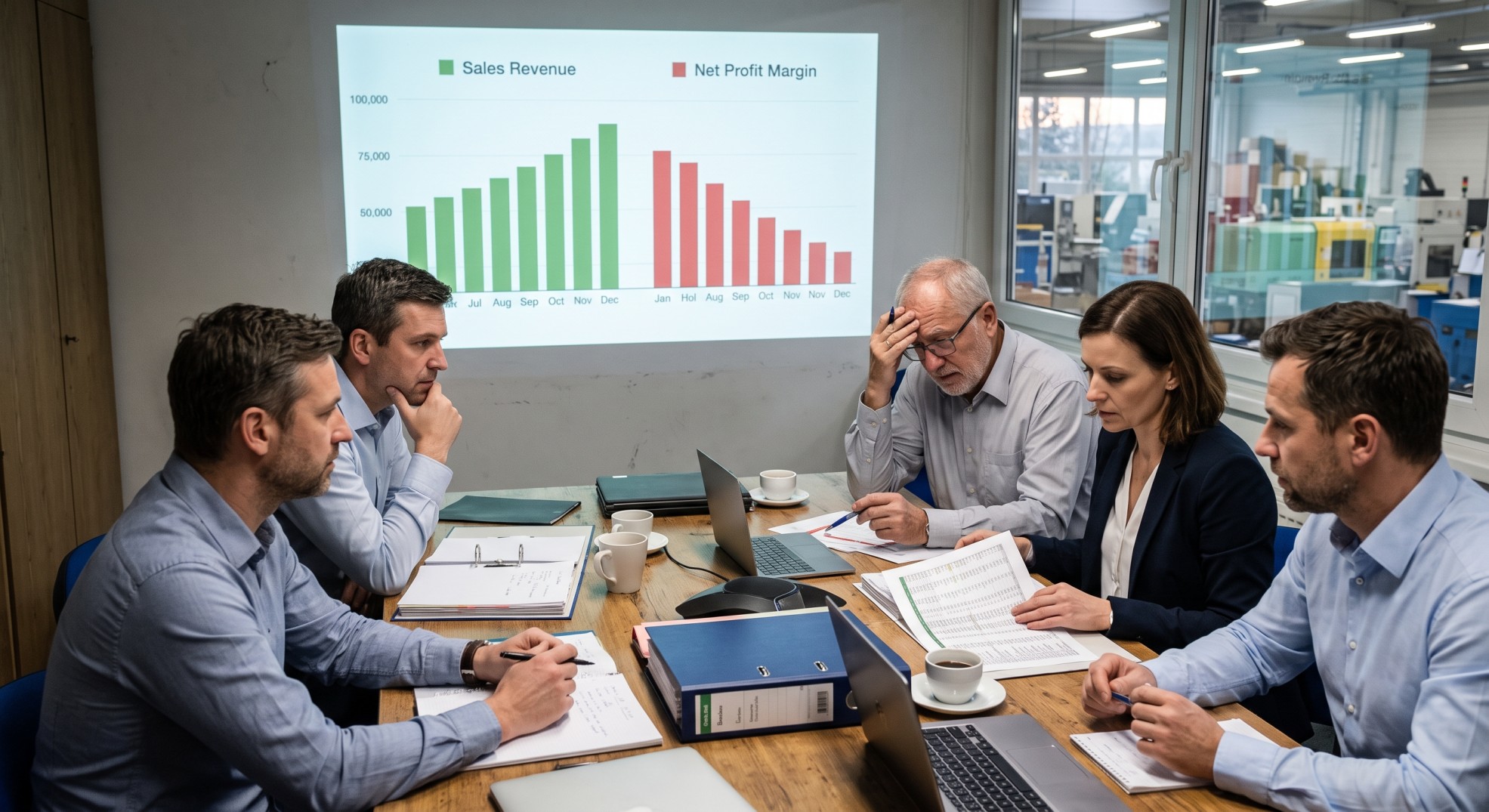
If your sales are rising but margins are shrinking, the likely culprits are input costs outpacing price increases, operational inefficiencies, misaligned pricing strategies, hidden overhead or inventory costs, or a product mix favoring lower-margin offerings. For businesses operating internationally, factors like exchange rates and trade policies can also create pressure. A detailed cost-to-serve analysis combined with expert guidance is the best way to pinpoint where your margins are slipping.
Growing revenue is exciting, especially for mid-market manufacturers and family-owned businesses. It’s often the first number shared because it’s easy to explain and celebrate. But sales growth without profit growth only tells part of the story. Shrinking margins alongside climbing revenue means the business is working harder to earn less—an issue that typically worsens if left unchecked.
This pattern is common in privately held manufacturing and distribution companies. Rising costs, pricing pressures, and inefficiencies tend to creep in gradually, rather than through one obvious event. Identifying where margins are eroding isn’t just accounting—it’s critical for sustainable growth. Scaling revenue without protecting profitability means scaling problems alongside sales.
The Margin Squeeze: Where Is Your Profit Going?
Margin erosion rarely stems from a single issue. Multiple factors often combine, making it hard to diagnose from financial statements alone.
Are Input Costs Outpacing Price Increases?
Material, freight, and component costs may rise faster than your ability—or willingness—to increase prices. If price hikes lag behind cost inflation, gross margins shrink with every unit sold. When cost increases are structural rather than temporary, consider adjusting prices instead of absorbing the difference. Absorbing costs only works if the increase is genuinely short-term.
Are Operational Inefficiencies Draining Profit?
Bottlenecks, rework, changeover delays, and inconsistent processes in production, supply chain, or logistics can quietly increase costs. These inefficiencies don’t show up as a single expense—they raise cost-to-serve across the board, eating into margins as sales grow.
Is Your Pricing Strategy Outdated?
Pricing strategies often remain static, even as the business or market conditions evolve. If your company has moved upmarket in quality or service but hasn’t adjusted pricing to match, you’re leaving profit on the table.
Are Hidden Costs Lurking in Overhead and Inventory?
Hidden overhead, excess inventory carrying costs, and inconsistent cost allocation across product lines or customers can obscure which parts of your business are profitable and which are subsidizing the rest.
Is Your Product Mix Shifting Toward Low-Margin Offerings?
Sales growth in lower-margin products or customer segments can boost revenue while reducing overall profitability. Without clear visibility into product and customer profitability, this shift often goes unnoticed until it’s significant.
How Do Geographic and Trade Dynamics Affect Margins?
International operations introduce additional complexities. Exchange rate fluctuations can alter sourcing or pricing economics overnight, while changing trade policies or tariffs can create sudden cost pressures. Regional competitive dynamics can also require localized pricing strategies instead of a one-size-fits-all approach.
Instead of relying on headline unit prices, conduct a full landed-cost analysis, factoring in duties, freight, currency exposure, and channel margins.
Diagnosing Margin Erosion: Where to Start
A thorough diagnostic process helps businesses move from reacting to margin pressure to resolving it. Consider these steps:
- Cost-to-serve analysis: Evaluate profitability by product, customer, and geography to understand where profit is generated—not just revenue.
- Operational benchmarking: Compare your operations to industry standards to identify inefficiencies.
- Pricing strategy assessment: Align pricing with the value perceived by your customers.
- Product mix and customer segmentation review: Identify whether growth is coming from profitable sources.
- Supply chain and procurement review: Ensure sourcing decisions reflect current costs and risks.
Each step answers a critical question, and skipping any often leaves part of the margin story hidden.
Strategic Solutions to Restore Margins
Diagnosing the issue is only part of the solution—the next step is taking action.
ID2Solve's Operations Advisory identifies where margins are leaking through waste, inefficiencies, or inconsistent processes and prioritizes actionable improvements.
For cross-border challenges like supplier risks, exchange rate exposure, or trade policy shifts, Asesoría de Importación y Exportación evaluates the full landed cost and explores alternatives before further investment.
Family-owned businesses may face governance challenges that compound margin issues. Asesoría familiar empresarial aligns profit objectives with growth strategies, ensuring pricing, costs, and investments work in harmony instead of at odds.
Growth Without Profit Isn't Sustainable
Sales growth is easy to celebrate, but without disciplined margin management, it’s unsustainable. Shrinking margins reduce a business's ability to reinvest, compete, and thrive. Diagnosing margin erosion requires both analysis and experience from those who have managed operations, not just studied them.
If your sales are rising but margins are falling, it’s time for a closer look. Visit www.ID2Solve.com to learn how our advisory services can help restore profitability—and speak with a senior consultant to uncover what your numbers are really telling you.
Frequently Asked Questions
Why are my margins falling even with rising sales?
Margins shrink when input costs outpace price increases, operations grow inefficient, pricing strategies become outdated, overhead costs go untracked, or product mix shifts toward low-margin offerings. Often, these factors overlap.
How can I tell if the issue is pricing or operations?
A cost-to-serve analysis by product, customer, and geography can reveal the cause. If margin loss is concentrated in specific products or customers, pricing may be the issue. If losses are broad, operational inefficiencies are more likely.
Can exchange rates impact a domestic business?
Yes. If your supply chain includes imported materials or goods, currency fluctuations can significantly affect costs, even if you sell only in your home market.
How long does a margin diagnostic take?
Timelines depend on scope, but focused engagements like ID2Solve’s Advisory Sprint deliver actionable insights in under 30 days.
Is this relevant only to manufacturers?
No. Margin erosion affects most businesses dealing with physical products, supply chains, or cross-border operations, including distributors and food companies. Family-owned businesses, in particular, can benefit from governance reviews to address financial pressures.
0 Comentarios